 Gabe Luna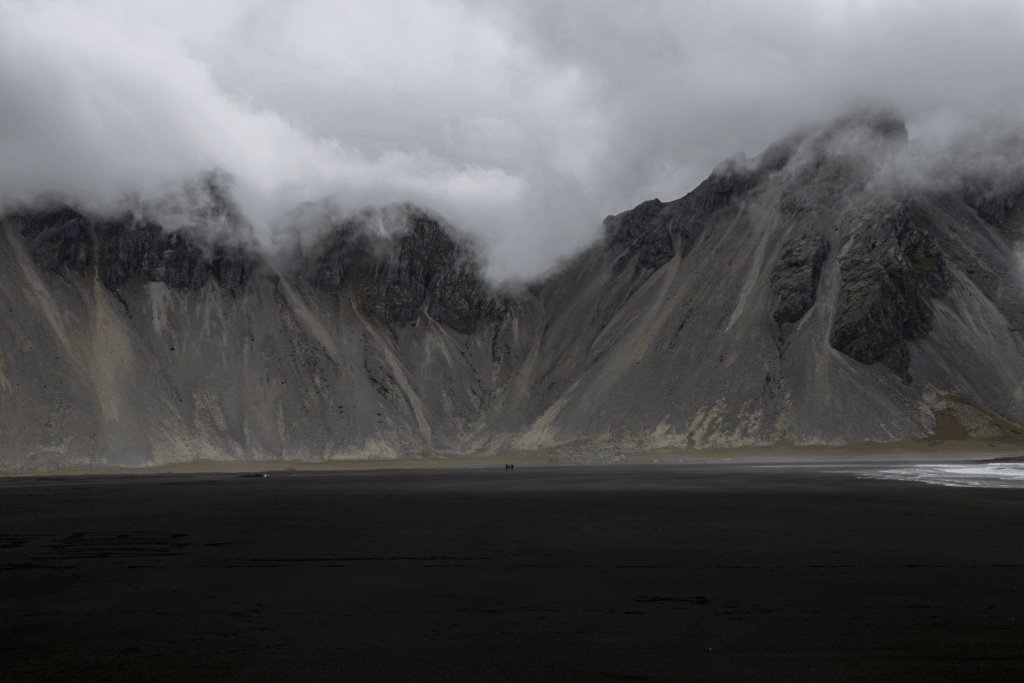
When Katie and I eloped in Iceland, it felt like we had stepped through a crack in the world and into someplace entirely new. One day we were juggling flights and last-minute details, the next, we were standing on black sand with the wind in our faces, rings on our fingers, mountains rising straight out of the sea. After we said our vows, we didn’t fly home right away. Instead, we stayed for two more weeks and circumnavigated the island, tracing the Ring Road in a little car that became our home. Our days settled into a rhythm: wake to the sound of rain or gulls, drive until the landscape changed again, stop whenever something made us say, “We have to pull over,” which was often!
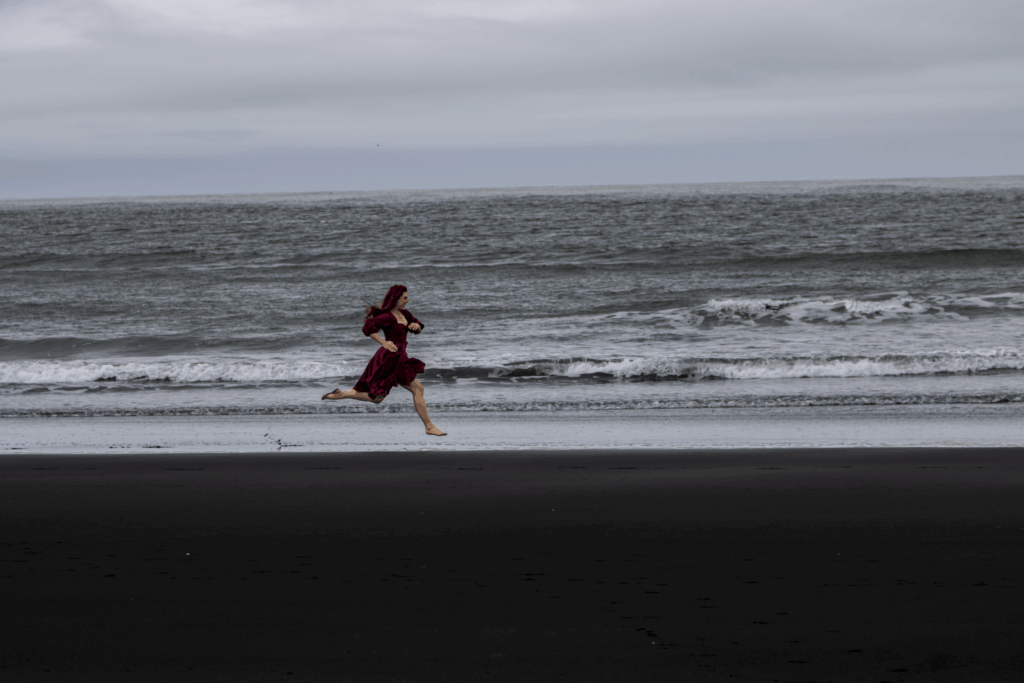
On the south coast, Vestrahorn appeared out of the mist like a mirage jagged peaks spilling into black sand and low clouds curling around the ridges. It felt like a place where dragons should live, not newlyweds with granola bars in their pockets. We walked in the drizzle, watching powerful waves erase our footprints almost as soon as we made them.
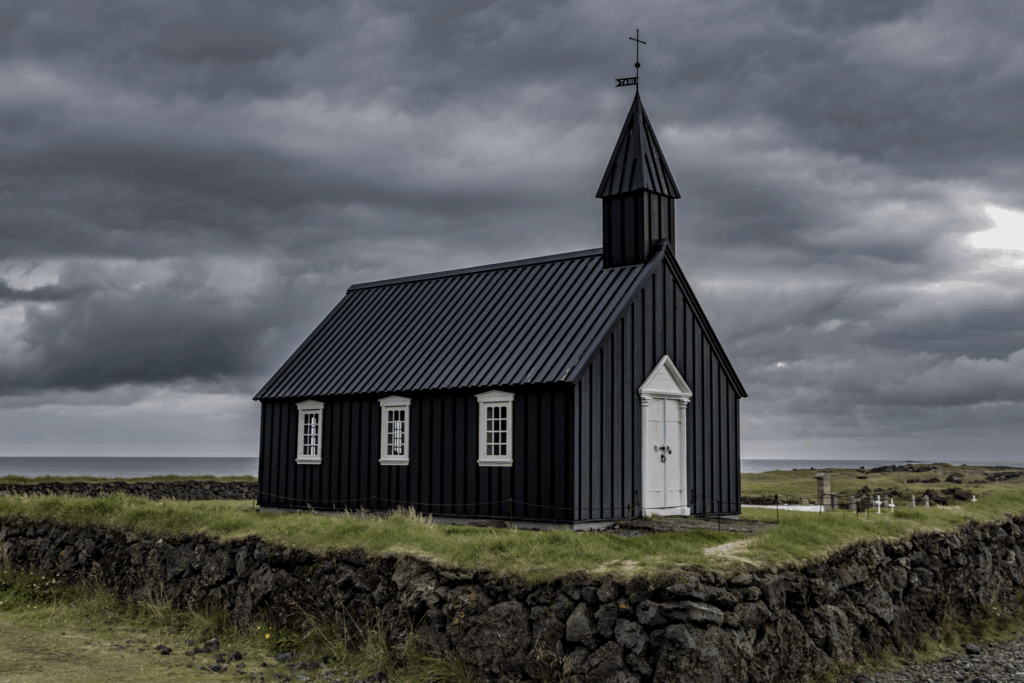
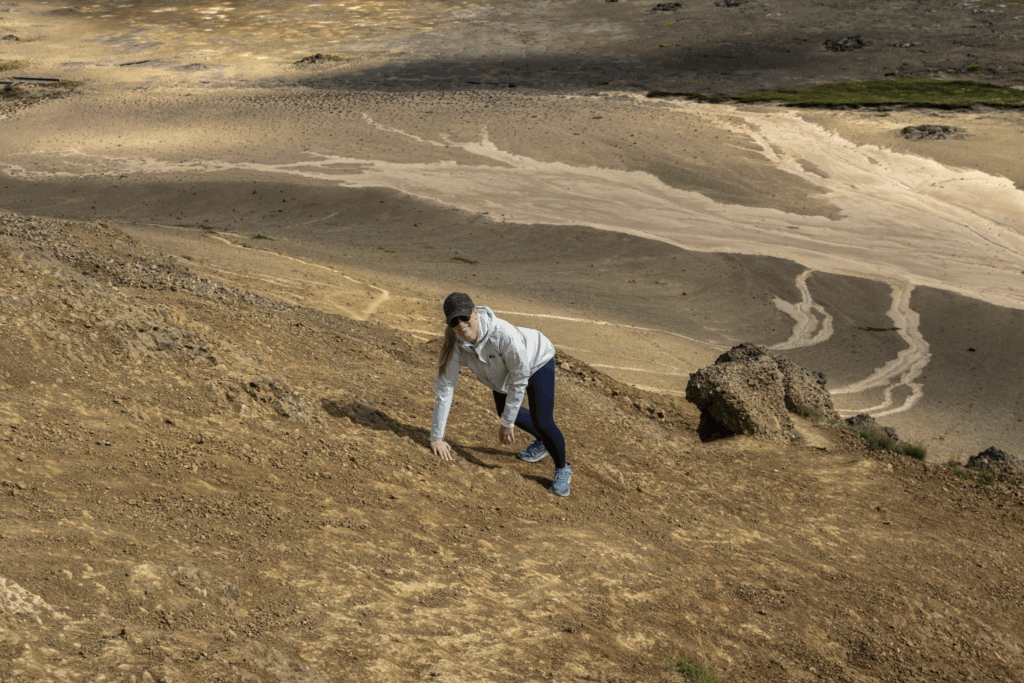
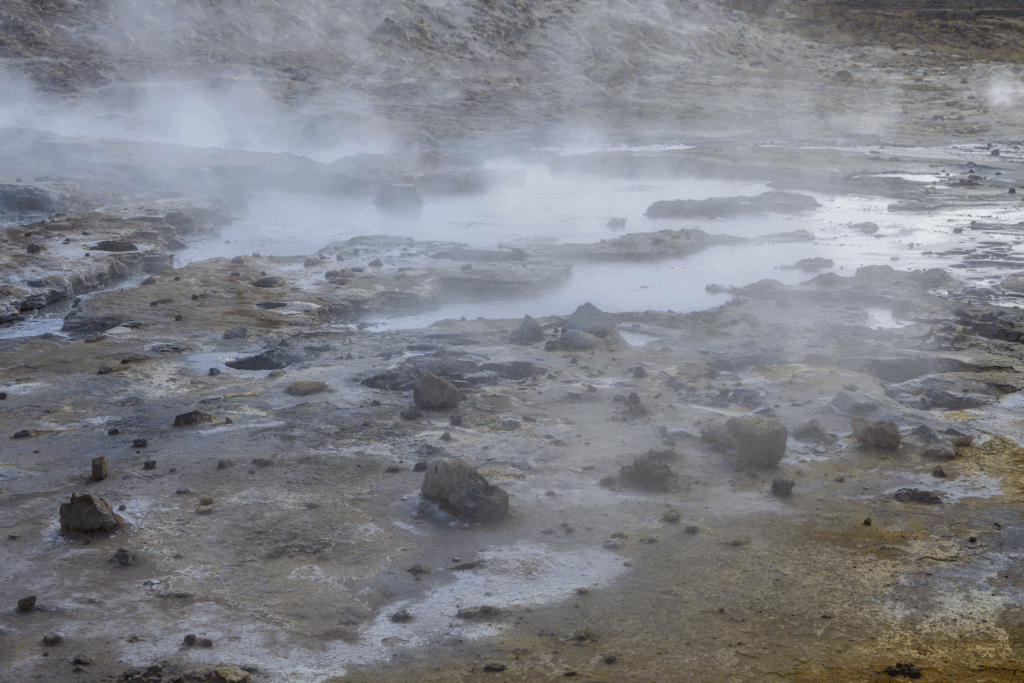
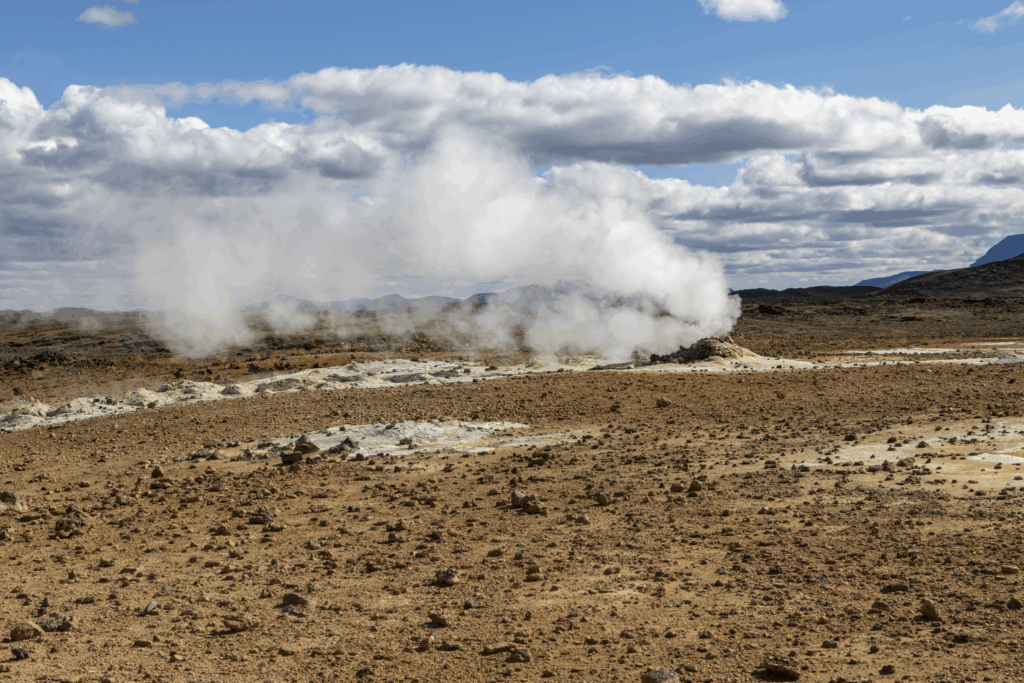
Farther along, we found the small black church perched on a lava field, facing the sea. Its dark walls and simple white door made it look like a charcoal sketch pulled into three dimensions. There was a graveyard behind it and miles of empty coastline in front, and for a moment it was just the two of us and the sound of the wind scraping over the rocks. It was both lonely and comforting proof that people have built lives in this raw landscape for generations. The earth itself never let us forget how alive it was. We hiked through geothermal areas where the ground steamed and hissed, the soil stained with mineral colors you’d expect in a painting, not under your boots. Puddles weren’t always water; sometimes they were mud pits quietly boiling, sending up the smell of sulfur as if the island were exhaling. Walking there felt like tiptoeing across the crust of something huge and breathing.
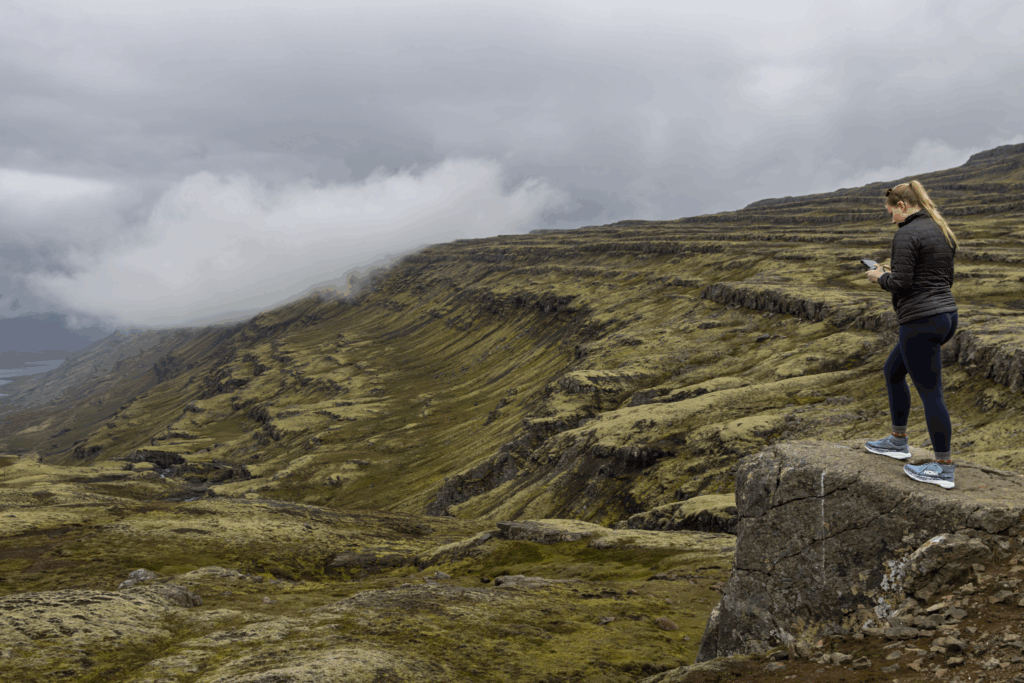
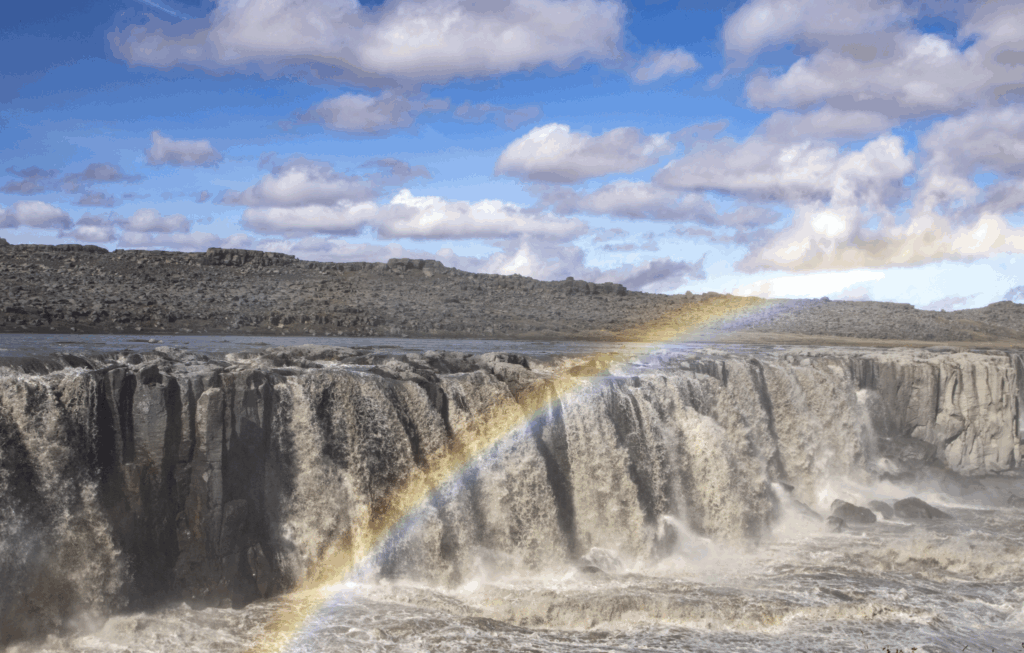
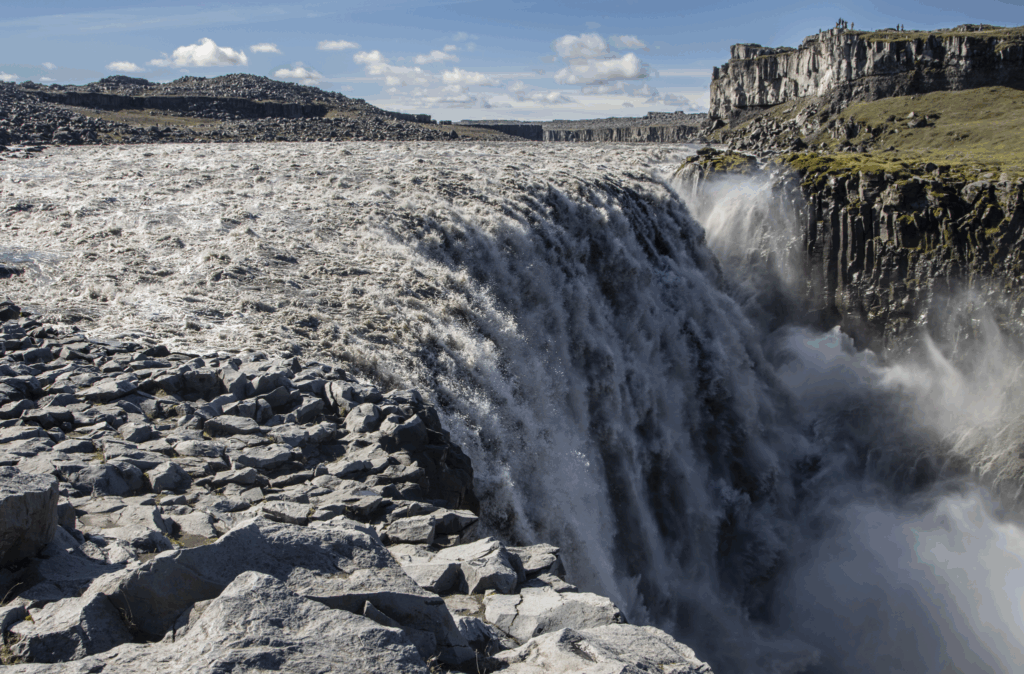
In the north, the power of water took center stage. We followed the sound of it long before we saw it, a low, unbroken roar that grew louder with every step. Then the canyon opened and there was Dettifoss, a wall of white water relentlessly pounding into the gorge below. The spray hit our faces from what felt like an impossible distance. For a few minutes a rainbow stretched across the falls, hanging there like a bridge between the familiar world we came from and this strange, beautiful one we had married into.
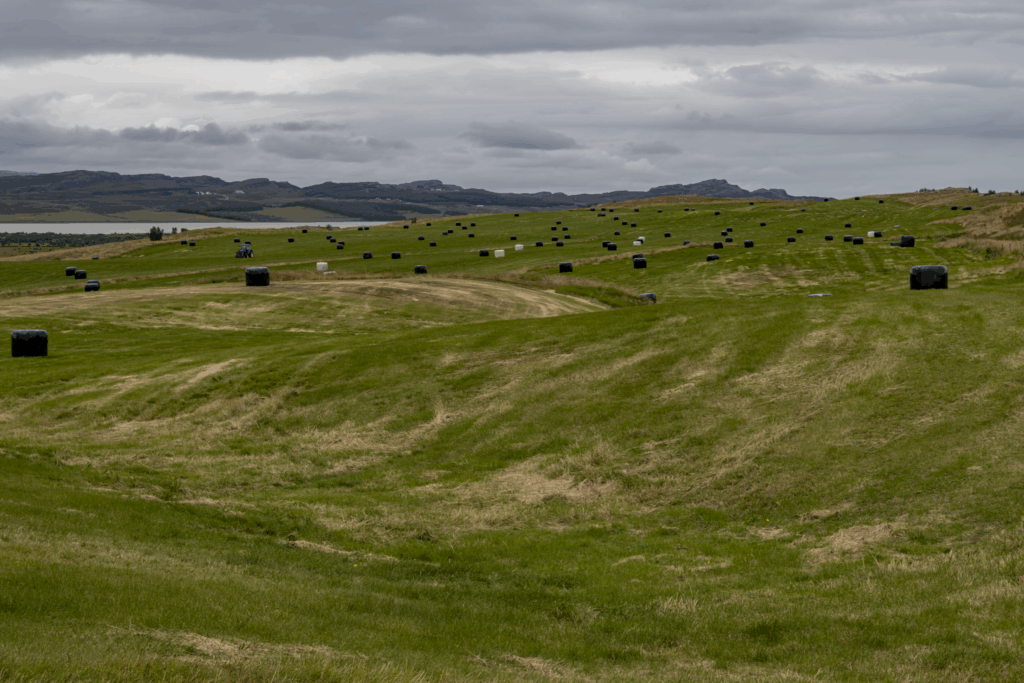
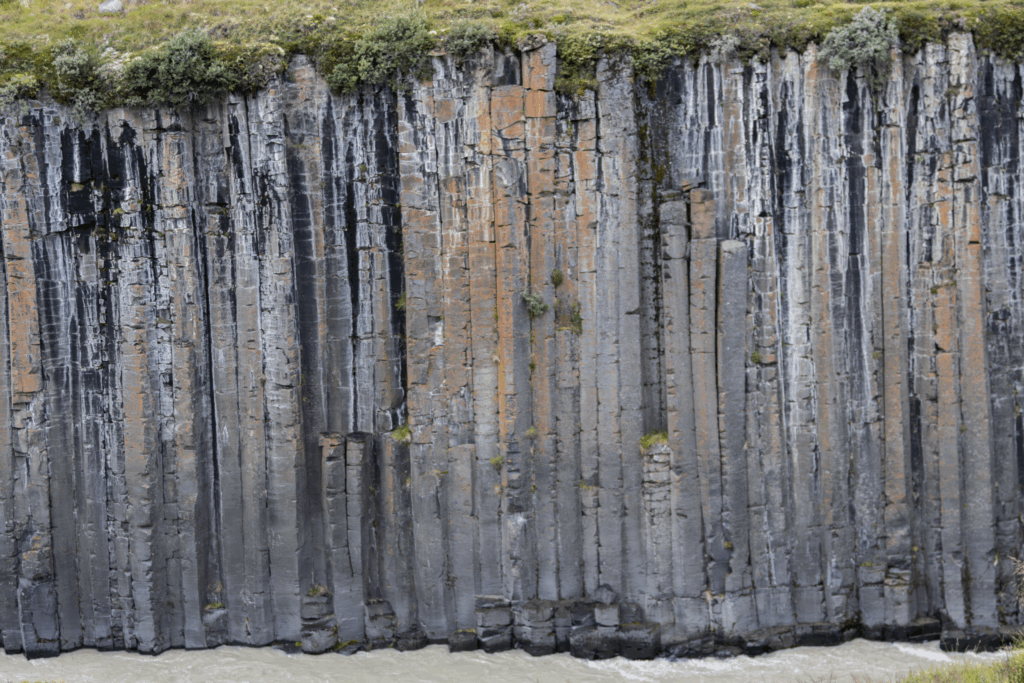
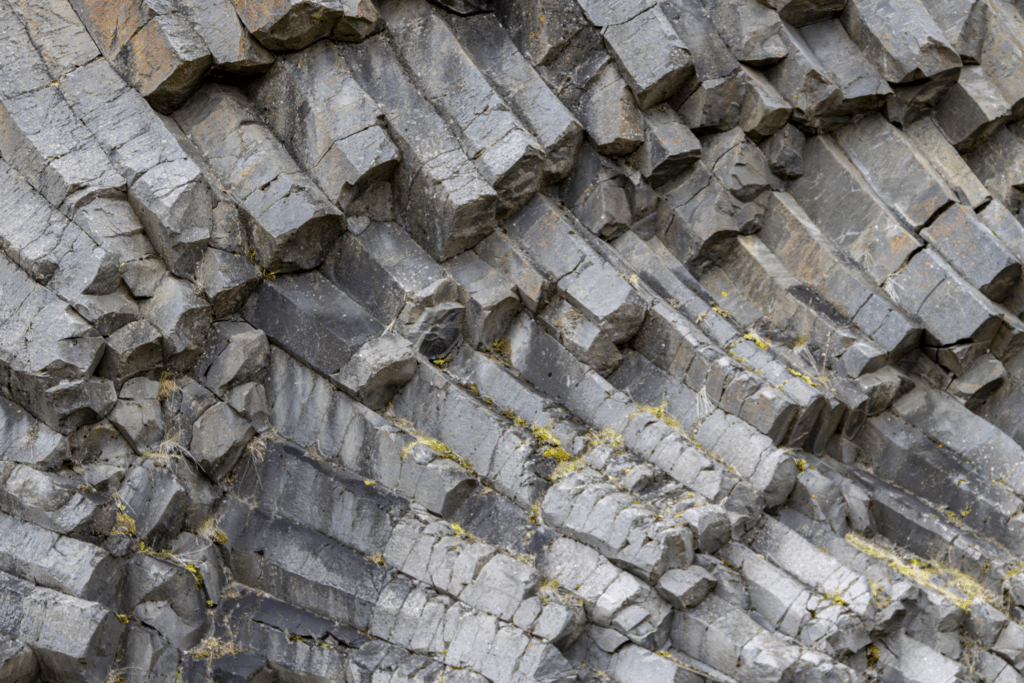
Not all of Iceland is dramatic in the same way. Some of the most memorable stretches were quiet: rolling green fields dotted with black hay bales, farmhouses tucked against hills, sheep that stared at us with mild suspicion. Those scenes grounded the trip. This wasn’t just a fantasy landscape or a movie set people live here, raise kids here, ride out long winters here. It made the wild parts feel even wilder. Then there were the rocks. Iceland’s basalt formations were like natural cathedrals, columns rising straight up, stacked and symmetrical, as if some meticulous architect had carved them with a ruler and chisel. In other places the same rock was twisted and fractured, tilted at odd angles as if the ground had been shaken and the pieces never quite fit back together. Standing beneath those cliffs, we felt small in the best possible way.
Driving around Iceland after our elopement, I kept thinking that we were seeing the planet without its usual disguise. No thick forests, no layers of city, no cozy blanket of familiarity just raw earth, freshly cooled lava, glaciers, waterfalls, and steam rising from cracks in the ground. It looked strange and otherworldly, but somehow it made our own small human story feel even more precious.
We came to Iceland to get married. We left feeling like we had been given a glimpse of the planet mid-creation fire beneath our feet, ice on the horizon, and a road that kept winding toward the next impossible view.
This is our love story, written in black sand, basalt columns, glaciers, and volcanoes.